New School Year, Same Kid: What Are They Carrying Back to School With Them?
Here we go again.
It is August.
Parents everywhere are buying Nike shoes, Adidas backpacks, Lululemon belt bags, Stanley and Owala water bottles, AirPods, new clothes, new lunchboxes, and whatever else our kids have decided they absolutely cannot possibly start school without.
Because apparently you cannot learn algebra without the correct water bottle.
We are ordering from Amazon at 10:00 at night because somebody just remembered they need a very specific notebook.
We are getting haircuts, physicals, uniforms, sports equipment, and school supplies.
Teenagers are planning the first-day outfit like the paparazzi will be waiting at the front door.
Little kids are picking out backpacks and lunchboxes.
Preteens are already checking to see who is in whose class.
And parents?
We are just trying to get everybody out the door with shoes on.
I get it.
But while you’re checking off that school supply list, I want you to think about something that isn’t on the list.
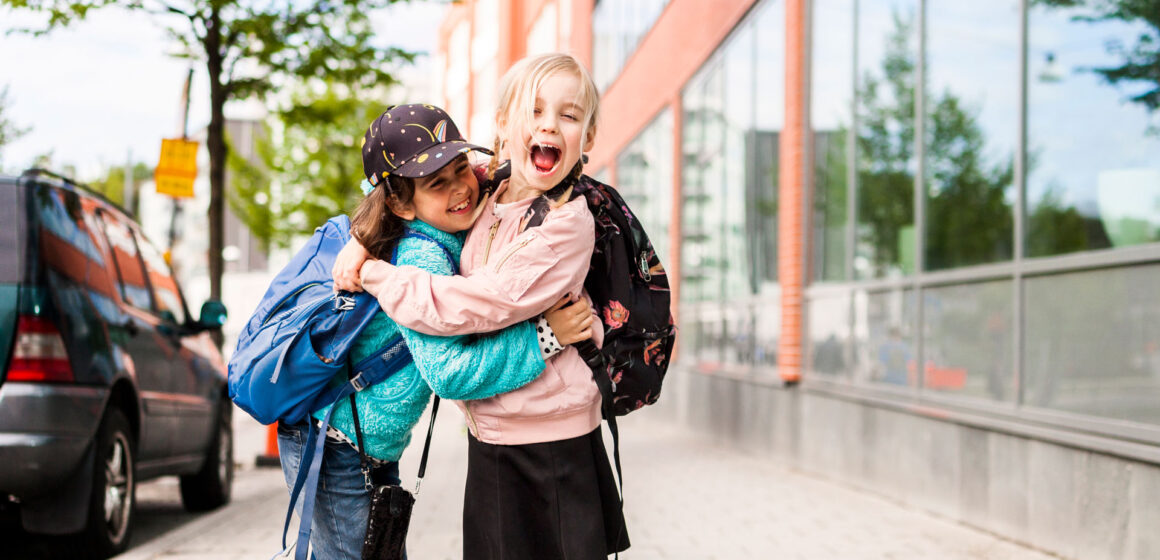
Your kid is taking two backpacks to school this year.
One is the one you bought.
The other one is invisible.
And trust me, that one matters a whole lot more.
Because your child isn’t walking into a new school year with a clean slate just because they have new Nikes, a fresh haircut, and a Stanley cup.
New school year. Same kid.
And they’re bringing everything with them.
What happened last year.
What happened this summer.
The friend who suddenly stopped talking to them. The group chat they were left out of.
The party they saw online that they weren’t invited to. The friend they desperately want back.
The boyfriend or girlfriend who dumped them.
The kid they’re praying they don’t see in the hallway.
The divorce happening at home.
Mom and Dad fighting.
The person they lost and nobody realizes they’re still grieving.
The body they don’t like.
The grades they think determine how smart they are.
The team they’re terrified they won’t make.
The pressure to be popular.
The fear of disappointing you.
And sometimes the biggest concern of all:
Who am I going to sit with at lunch?
Adults, don’t underestimate that one.
You may think, It’s lunch. Sit down and eat.
To a 12-year-old walking into a cafeteria alone, it can feel like entering the Hunger Games.
That’s what’s in the other backpack.
And no pair of Nikes is going to make it disappear.
A Stanley cup won’t fix loneliness.
A Lululemon bag won’t make your child feel like they belong.
And the newest phone isn’t going to help when they use it to watch everyone else having fun without them.
We spend an unbelievable amount of time getting our kids physically ready for school.
My question is:
Are they emotionally ready?
And an even bigger question:
Do you have any idea what your child is carrying into this school year? “I’m Fine.”
Kids don’t always tell us what’s going on. Sometimes they don’t have the words. Sometimes they don’t think we’ll understand. Sometimes they think we’ll overreact.
And let’s be fair.
Sometimes we do.
Sometimes they don’t want to disappoint us.
And sometimes they just don’t want to answer 500 questions the second they get in the car.
So we get:
“I’m fine.”
“I don’t care.”
“Whatever.”
“I don’t want to talk about it.”
And my personal favorite…
“Nothing.”
Nothing rarely means nothing.
That doesn’t mean you need to turn on the interrogation lamp. It means pay attention.
And Then There Are the Preteens
Oh, the preteen years.
They’re not little kids anymore.
They’re not teenagers.
But don’t tell them that.
This is the age when friendships can suddenly become incredibly complicated.
Best friends change.
Groups form.
Groups break up.
Someone is your best friend on Monday, you are never speaking to them again on Wednesday, and they’re sleeping over Friday night.
Try to keep up.
They start noticing everything.
Who is popular.
Who has a phone.
Who is allowed on social media. Who wears makeup.
Who has the right shoes.
Who is developing first.
Who isn’t developing at all.
Who has a boyfriend.
Who has a girlfriend.
Who got invited.
And, most importantly, who didn’t.
Your preteen may suddenly care desperately about what every kid at school thinks about them while acting like they couldn’t care less what you think.
This is also an age of very big feelings and not always enough words to explain them.
So what do you get?
Attitude.
Tears.
Anger.
Door slamming.
“You don’t understand!”
“Everyone hates me!”
“I’m the ONLY one!”
And parents, can we stop with:
“Don’t give me that attitude!”
They have attitude.
They’re preteens and teenagers.
Some days, attitude is practically their primary language.
I’m not saying you allow your child to be disrespectful. Absolutely not.
There are still boundaries, expectations, and consequences.
But don’t get so focused on the eye roll, the tone, the sigh, or the dramatic flop onto the couch that you completely miss what’s underneath it.
Sometimes the attitude is disrespect.
And sometimes the attitude is:
I’m embarrassed.
I’m overwhelmed.
My feelings are hurt.
I had a horrible day.
Someone was mean to me.
I don’t know how to tell you what’s wrong.
Address the behavior, yes.
But don’t spend the entire conversation arguing about how they said something and completely miss what they were trying to say.
Maybe they’re embarrassed.
Maybe they were rejected.
Maybe someone made fun of them.
Maybe they’re lonely.
Maybe their body is changing and they hate it.
Maybe everybody else’s body is changing and theirs isn’t.
Maybe they just desperately want to belong.
That’s going in the backpack too.
Teenagers: They Care More Than They Want You to Know
Every teenager is different.
But there are certain things I hear over and over again.
Teenage boys may worry about their height, their body, muscles, sports, making the team, being good enough, being funny enough, dating, sex, popularity, fitting in with other guys, or being picked on.
And guess what?
They may tell you absolutely none of this. Instead, they get angry.
They disappear into their rooms.
They put on headphones.
They play video games for hours. You ask what’s wrong.
“Nothing.”
You ask if they want to talk.
“No.”
You ask one more question.
Now you’re annoying.
Don’t assume your son isn’t struggling because he isn’t crying.
Teenage girls may be carrying friendships, appearance, weight, clothes, dating, popularity, who texted, who didn’t, who was invited, who wasn’t, and what everyone else is doing without them.
A teenage girl can be sitting completely safe in her bedroom and still feel rejected by the entire world.
All she has to do is open her phone. There it is.
The party she wasn’t invited to.
The sleepover nobody mentioned. Her friends laughing without her. The girl she thinks is prettier.
The body she wishes she had.
The life she thinks everyone else is living.
That’s going in the backpack too.
Your son may show insecurity as anger.
Your daughter may show rejection as drama.
Your teenager may show anxiety as attitude.
And your kid may say:
“I don’t care.”
When what they really mean is:
“I care so much that I don’t know what to do with it.”
Parents, Start Paying Attention Now
Don’t wait until the first meltdown.
Don’t wait until your child refuses to go to school.
Don’t wait for the mysterious stomachache that appears every Monday morning and miraculously disappears by Saturday.
Don’t wait until the school counselor calls.
Watch your kid now.
Have they gotten quieter?
More irritable?
Are they staying in their room more?
Are they suddenly obsessed with their appearance?
Are they checking their phone every 30 seconds?
Does their entire mood change because one person didn’t text them back?
Are they constantly talking about one friend?
Or did they suddenly stop talking about a friend who used to be around all the time?
Listen when you hear:
“Nobody likes me.”
“I don’t have any friends.”
“Everyone is talking about me.”
“I’m not going.”
“I hate school.”
“I’m ugly.”
“I’m stupid.”
“I’m going to be alone.”
And please don’t immediately say:
“That’s ridiculous. Of course people like you.”
You may know it isn’t true.
But right now, to your child, it may feel completely true. Get curious before you start correcting.
Get Them Out of Their Rooms
Yes, teenagers like their rooms.
Yes, they want privacy.
Yes, it is normal for them to want more time away from you.
But that doesn’t mean your teenager should move into their bedroom and only come out for food and Wi-Fi.
Get them out of their rooms.
They need sunlight. Fresh air. Movement. Conversation.
They need to ride in the car with you.
Walk the dog.
Go to the grocery store.
Sit in the living room.
Be around their siblings.
And yes…
Eat dinner with you.
I am a huge believer in family dinners.
And before you tell me you don’t cook…
Learn how!!
You don’t have to become a chef.
Use Youtube or social media – you scroll for way less important content! Nobody is asking you to make beef Wellington on a Tuesday night. Make spaghetti.
Tacos.
Grilled cheese.
Scrambled eggs.
Heat up a rotisserie chicken.
Figure out five simple meals and learn how to make them.
And if you don’t have time?
Make time.
I’m not saying seven nights a week.
Life is busy. I get it.
But stop allowing “we’re too busy” to become the permanent excuse.
Stop ordering food every night, handing everyone a container, and watching them disappear into separate rooms.
Sit down.
Put the phones away.
Eat together.
And let me say this:
Even if it is just you and your child—this matters.
Maybe you’re a single parent.
Maybe you’re divorced.
Maybe you have one child.
Maybe your older kids have left home.
Maybe it’s just the two of you.
Sit down anyway.
And if tonight requires ordering a pizza, fine.
Take it out of the box.
Put it on the table.
Put the phones somewhere else.
And sit down together.
Look at each other.
Talk.
Laugh.
Ask about something completely ridiculous.
Tell them something about your day.
Let them tell you about theirs.
Or let them sit there and say absolutely nothing.
The point is that you showed up.
For those 20 or 30 minutes, your child knows:
I’m not alone.
Someone sees me.
Someone wants to spend time with me.
I belong here.
Two people sitting at a table together is still a family dinner.
And it still matters.
Better yet, get your kids involved.
Teach them how to cook.
Your 10-year-old can set the table.
Your preteen can help prepare the food.
Your teenager can learn how to make tacos, scramble eggs, boil pasta, grill a burger, or make one decent meal from beginning to end.
These are life skills.
Your child is eventually going to leave your house. Hopefully.
Teach them how to feed themselves.
But here’s the bigger reason family dinners matter: You see your kid.
You look at their face.
You hear their voice.
You notice they’re unusually quiet.
You notice they aren’t eating.
You notice they’re irritated.
You notice they’re sad.
You notice they’re laughing again.
Connection doesn’t always happen because you sit your teenager down and say:
“I’d like to talk about your feelings.”
Good luck with that.
Sometimes it happens while you’re making tacos.
Sometimes it’s in the car.
Sometimes it’s while they’re complaining about unloading the dishwasher.
Sometimes it’s sitting around a table talking about absolutely nothing important.
That’s family.
I know it’s easier sometimes to let them stay in their rooms.
They’re quiet.
They’re not arguing.
You don’t have to deal with the attitude.
Frankly, sometimes it’s peaceful.
But it’s easier to allow them to isolate until you’re lying awake at 2:00 in the morning worrying yourself sick about what’s happening behind that closed door.
What are they watching? Who are they talking to? Are they talking to anyone? Are they sleeping?
Are they crying?
Are they scrolling for six hours?
Are they lonely?
Are they depressed?
Or are they perfectly fine and just watching Netflix?
You won’t know if you never see them.
Privacy is normal. Isolation is different.
Know the difference. So parent them. Knock on the door. Open the blinds.
Tell them dinner is ready.
Ask them to ride with you.
Hand them the dog leash.
Give them a job in the kitchen.
Make them come outside.
Keep pulling them back into the family—even when they act like spending 30 minutes with you is the greatest hardship they’ve ever endured.
Because whether they’ll admit it or not…
They still need you.
Ask Better Questions
“Are you excited about school?” Seriously?
You know the answer you’re going to get. “Yeah.”
“No.”
“I don’t know.”
Shrug.
Try something else.
What are you looking forward to?
What are you absolutely NOT looking forward to?
What is your biggest worry about going back?
Who are you hoping is in your class?
Is there anyone you’re worried about seeing?
Did anything happen with your friends this summer that I don’t know about?
If you could change one thing about last school year, what would it be?
When you think about the first day, what feels the hardest?
And then comes the really hard part for parents.
Stop talking.
Listen.
Don’t lecture.
Don’t immediately call another parent.
Don’t grab their phone.
Don’t tell them what they should have done.
Don’t turn their story into a story about something that happened to you in seventh grade.
And don’t immediately try to fix it.
You are gathering information.
You can’t help your child unpack a backpack when you don’t even know what’s inside it.
“Mom, I Need a Therapist.”
I hear this more and more from kids and teenagers.
And I’m actually glad kids are talking about mental health.
When I was growing up, nobody talked about this stuff. You sucked it up and moved on.
That didn’t work out so well for a lot of people either.
But I also think we need to be careful about going too far in the other direction.
Therapy should not become another accessory in the backpack.
Sometimes a child absolutely needs professional help.
Sometimes a child needs a safe person outside the family to talk to.
Sometimes your child is carrying something they haven’t been able to tell you.
And sometimes your child is experiencing something called…
Life.
Disappointment.
Rejection.
A friendship ending.
Not making the team.
Being left out.
Getting a bad grade.
Feeling awkward.
Having their heart broken.
These things hurt.
They are supposed to hurt.
But being uncomfortable doesn’t automatically mean something is wrong with your child.
So if your child says:
“I need a therapist.”
Don’t dismiss them.
Ask:
“Tell me what you think a therapist would help you with.”
And listen.
Maybe your child has been trying to tell you something.
Maybe they’re carrying something much heavier than you realized.
Maybe they truly need professional help.
Or maybe they need someone to help them learn that uncomfortable feelings are not emergencies.
That disappointment is survivable. That rejection hurts, but it passes. That friendships change.
That life is sometimes unfair.
And that they are capable of doing hard things.
Stop Trying to Fix Everything
Parents, this is a big one.
Your kid has a friendship problem.
You want to fix it.
They don’t make the team.
You want to call the coach.
They’re not invited to the party.
You want to call the other mom.
They have a difficult teacher.
You’re firing off an email before dinner.
Someone hurts their feelings.
You want that kid’s name, address, and probably their mother’s phone number. I understand.
We love our kids.
But we can’t remove every rock from the road and then expect our kids to know how to walk through life.
Sometimes our job isn’t to fix it.
Sometimes our job is to say:
“That sucks. I’m sorry. Now, what are you going to do?”
That’s not being cold.
That’s teaching resilience.
There is a huge difference between supporting your child and rescuing your child. Confidence comes from going through something hard and discovering:
I handled it.
But Sometimes the Backpack Is Too Heavy
Now I’m going to get serious.
There are times when this is more than normal back-to-school anxiety. If your child says:
“I don’t want to be here anymore.”
“I wish I could disappear.”
“Nobody would care if I died.”
“I wish I were dead.”
“I want to kill myself.”
Pay attention.
Don’t dismiss it as drama.
Don’t assume they’re saying it for attention.
And don’t become so panicked that you stop listening.
Not every child who says, “I want to die,” actually wants to end their life. But every child who says it is communicating something.
They may be saying:
I want this feeling to stop.
I don’t know how to handle this.
I feel completely alone.
I need somebody to hear me.
I don’t know how to explain how overwhelmed I am.
Or they may truly be saying:
I don’t want to be alive.
Your job is not to guess. Take the words seriously.
Ask questions.
Stay with them.
Get professional help to determine what is actually happening.
If you believe your child is in immediate danger, get emergency help.
And one more thing.
We hear people say:
“They’re just doing it for attention.”
Okay.
Then let’s ask:
Why does this child need attention so badly?
Needing attention is still needing something.
Find out what it is.
Parents, What’s in YOUR Backpack?
Yeah.
You have one too.
Sometimes the pressure our kids carry to school comes from us.
Ouch.
We want them to make the team.
Make good grades.
Take advanced classes.
Have friends.
Be popular.
Be included.
Get invited.
Go to the right college.
Make us proud.
Sometimes we compare them to their siblings.
Sometimes we compare them to our friends’ kids.
Sometimes we don’t even realize we’re doing it.
Your child needs to know something before they walk into school this year. They don’t have to be the smartest kid in the class.
The best athlete on the team.
The prettiest girl.
The funniest boy.
The most popular kid.
Or invited to every party.
If your child is terrified to disappoint you…
That’s going in their backpack too.
So What Can You Do Before the First Day?
Don’t spend the next few weeks only buying stuff.
Get your child emotionally ready too.
Talk.
Listen.
Get the sleep schedule back on track.
Yes, I know.
Good luck with that one.
Drive by the school if they’re nervous.
Walk the campus if you can.
Talk through the first day.
And talk about the uncomfortable stuff before it happens.
What will you do if you don’t know anyone at lunch?
What if your best friend isn’t in your class?
What if someone ignores you?
What if you see pictures of something you weren’t invited to?
Who is an adult at school you trust?
Who can you talk to when you get home?
Give your child options.
Kids handle difficult situations better when they’ve already thought about what they can do.
So, What’s in Your Kid’s Backpack?
Before this school year begins, find out.
And I’m not talking about the one hanging by the door.
I’m talking about the one you can’t see.
Maybe they’re carrying something small that just needs a conversation.
Maybe they’re carrying something heavy they’ve been trying to manage alone.
Maybe they need reassurance.
Maybe they need boundaries.
Maybe they need you to listen.
Maybe they need you to stop rescuing them.
Maybe they need professional help.
The goal isn’t to send our kids into the new school year with an empty emotional backpack.
That’s impossible.
Everybody’s got something.
The goal is to teach our kids how to figure out what they’re carrying.
Talk about it.
Ask for help when they need it.
Put down the things that don’t belong to them.
And learn that they can carry the things that do.
So before you zip up the new backpack, fill the Stanley, take the obligatory first-day picture, and yell:
“Hurry up! We’re going to be late!”
Ask one more question.
“What are you carrying into this school year that you don’t want to carry alone?”
Then do the hardest thing for most of us. Stop talking.
And listen.
You might be surprised by what you hear.

Speaking Truth,

MS, CCDS, CRT, CCDS, CLC | Life Coach & Counselor