A 16-Hour Journey That Changed How I See People Forever
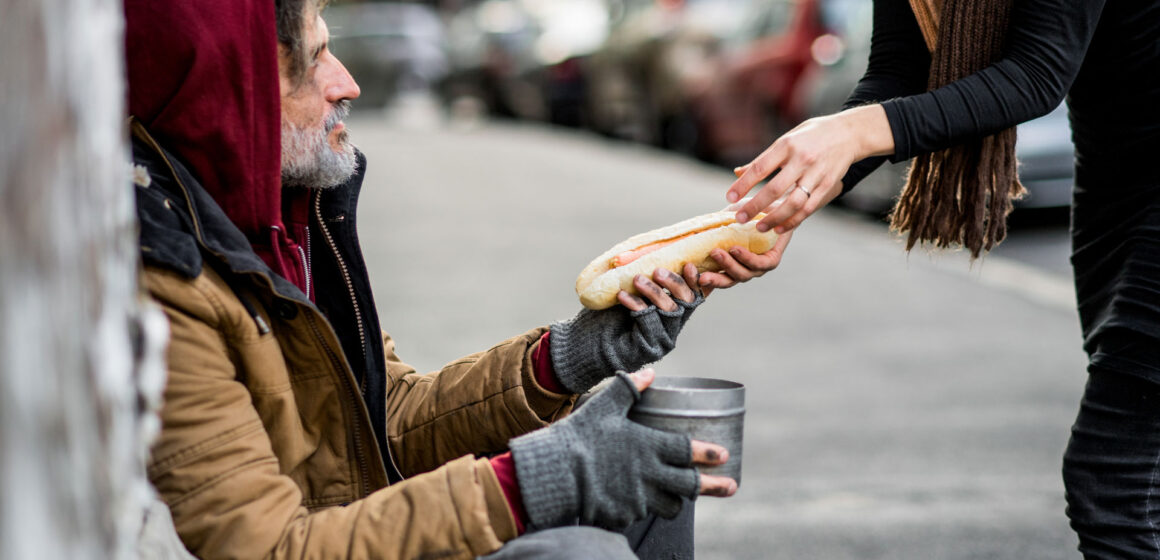
I’ve always said I wanted to go out and feed the homeless. For years. “One day I will…”
“I wish I could…”
“That would be amazing…”
All the noble phrases we use when we have zero actual intention of figuring out where to go, what to do, or what that even looks like.
It was a wish — not a plan.
But on the day before Thanksgiving, with no big agenda and no more excuses, I finally did it. I asked my son Will if he wanted to come with me. He said yes immediately. That “yes” flipped something inside me — suddenly this idea I’d talked about for years was happening.
And because my brain loves to overprepare, I thought, We need manpower… we need safety… so naturally I invited the tallest man I know, along with his wife and kids.
Then I asked two other families to join us — thinking their kids might learn something, see something meaningful, understand gratitude in a new way. I thought we adults were the guides, the protectors, the helpers.
Who knew I was the one who was going to learn the life lesson. Not the kids.
Not the families.
Me.
And then… the faces.
The moment we stepped out of the car, everything changed. The fear, the worry, the overthinking — gone.
I expected to feel nervous.
I expected to feel unsafe, unsure, on guard.
But I didn’t.
I didn’t feel scared.
I didn’t feel threatened.
I didn’t feel worried.
I felt a sense of peace — a deep, steady calm that surprised me.**
It wasn’t adrenaline. It wasn’t denial.
It was grounding.
This was exactly where I needed to be at this moment in time.
Right here.
With these people.
Doing this work.
Seeing what I needed to see.
And then I felt like I was watching myself from outside my own body… moving through something I had avoided for years.
What struck me first were their eyes.
Eyes that told stories without a word.
Eyes tired and worn, yet soft and searching.
Eyes that felt like open doors into their minds and hearts — if we had stood there long enough,
I’m convinced we could have stepped right into their stories.
Every person we handed a lunch to once had:
A mother.
A father.
A childhood.
A favorite toy.
A birthday cake.
Someone who loved them.
Someone who prayed they’d grow up safe and happy.
They weren’t “the homeless.”
They were people who had been hurt, broken, lost, forgotten, and overwhelmed by life in ways
we cannot begin to understand.
What they asked for nearly broke me.
Not one person — not a single individual — asked for money.
They asked for water.
Maybe a second bottle.
Maybe some fruit.
Basic things we trip over in our kitchens without thinking twice.
The women…
We handed out pads — sanitary napkins — and one woman grabbed me, held me in a hug that
said everything, and whispered she hadn’t had one in years. Years.
Let that sink in.
We handed out fresh Sam’s Club cupcakes — nothing fancy. Yet the way some people held them… like a prize, a treat, something special they didn’t expect — it hit me hard. This wasn’t condescending. I wasn’t proud. I was humbled, stunned, shaken by how something so small could mean so much.
And on a whim, I’d picked up light-up yard sticks with Santas and reindeer — silly, inexpensive, playful. I almost didn’t hand them out, thinking it would come across immature or pointless.
But watching grown adults light up — literally and emotionally — over something fun, something whimsical… something that reminded them of joy… was powerful.
The smallest things were huge.
A bottle of water.
A cupcake.
A pack of pads.
A light-up Santa stick.
Tiny things in my world. Life-changing things in theirs.
And then came the gut punch: How dare I.
How dare I ever judge someone living on the streets.
How dare I assume I knew why they were there — drugs, alcohol, bad choices, irresponsibility. How dare I ever believe the narrative that people “choose” homelessness.
Guess what?
Who cares?
Who cares what they used to numb the pain we can’t comprehend.
Who cares what coping looked like in the middle of trauma, abuse, mental illness, or unbearable loss.
Who cares what someone spent their last dollar on when their entire world collapsed underneath them.
Addiction is not a moral failure. Homelessness is not a character flaw.
And none of us — NONE — gets to sit on a throne of privilege and pretend we would have done better in their exact shoes.
Pain drives behavior. Trauma drives behavior. Survival drives behavior.
And I realized — deeply, painfully — that any of us could have been them if life had swung differently.
Cycle Room — Thanksgiving Morning
Sixteen hours later, I walked straight out of that world and into a cycle room.
A room packed with energy.
Laughter bouncing off the mirrors.
Acquaintances catching up.
New faces joining our regular class.
The instructor’s upbeat, contagious energy filled the space. Loud music thumping through the room.
It was bright.
It was alive.
It was completely normal.
And as I clipped into my bike, I thought:
No one here knows where I was yesterday.
While people chatted about Thanksgiving menus, calories, travel, and family drama, my mind was still on the streets.
I kept seeing the woman who hugged me over a pack of pads. The man who wanted nothing but water.
The adults smiling at a light-up Santa stick.
The way a single cupcake brought joy back into someone’s hands.
Two completely different worlds — existing in the same city,
on the same day,
inside the same woman.
My legs began pedaling, but my heart was still somewhere else entirely. Somewhere quieter.
Somewhere humbler.
Somewhere more awake.
And in that cycle room — surrounded by comfort, heat, music, abundance — a truth rose inside me with a force I couldn’t ignore:
We don’t choose our parents.
We don’t choose how we enter this world. We don’t choose our starting line.
I’ve always believed in personal choice — in hard work, effort, accountability. But what if some people never got the chance to choose?
What if trauma got to them first?
What if mental illness got to them first?
What if life attacked them before they even knew how to fight back?
What if it wasn’t a choice — What if it was an avalanche?
And the hardest truth of all:
If life had taken one different turn…
one tragedy,
one loss,
one diagnosis,
one betrayal,
one moment of bad luck…
I could have been on the other side of that lunch bag.
That is what cracked me open. That is what I can’t unsee. That is what changed me.
The Shift That Stays With You
I didn’t walk away from this experience feeling like a hero. I didn’t walk away feeling proud of myself.
I walked away changed.
Changed in a way that rearranges your insides.
Changed in a way that makes your old perspective feel too small, too shallow, too blind. Changed in a way that forces you to ask:
What else have I not been seeing?
Where else have I turned away?
Who else have I silently judged without knowing a damn thing about their story?
Because here’s the truth:
Kindness is not complicated.
Humanity is not complicated. Seeing people is not complicated.
We are the ones who complicate it.
A bottle of water.
A cupcake.
A pack of pads.
A silly light-up Santa stick.
None of it changed the world —
but for a moment, it changed their world.
And maybe that’s the point.
Maybe the world doesn’t need more heroes or saviors.
Maybe it needs more people who are willing to show up — quietly, humbly, consistently — and hand someone a little bit of dignity wrapped inside a lunch sack.
Maybe it needs people who stop walking past pain… and start looking it in the eyes.
So here’s what I know now:
You don’t have to fix everything.
You don’t have to save anyone.
You don’t have to start a movement.
Just do the thing you keep saying you’ll do.
Even if it’s small.
Even if it feels insignificant.
Even if you think someone else could do it better.
Because the smallest act of humanity can crack someone open — and sometimes, the person it cracks open is you.
Sixteen hours.
One afternoon on the streets. One morning in a cycle room.
That’s all it took to shift my perspective, my gratitude, and my understanding of what it means to truly see another human being.
And I hope — with everything in me — that this shift never leaves me.
Speaking Truth,

MS, CCDS, CRT, CCDS, CLC | Life Coach & Counselor